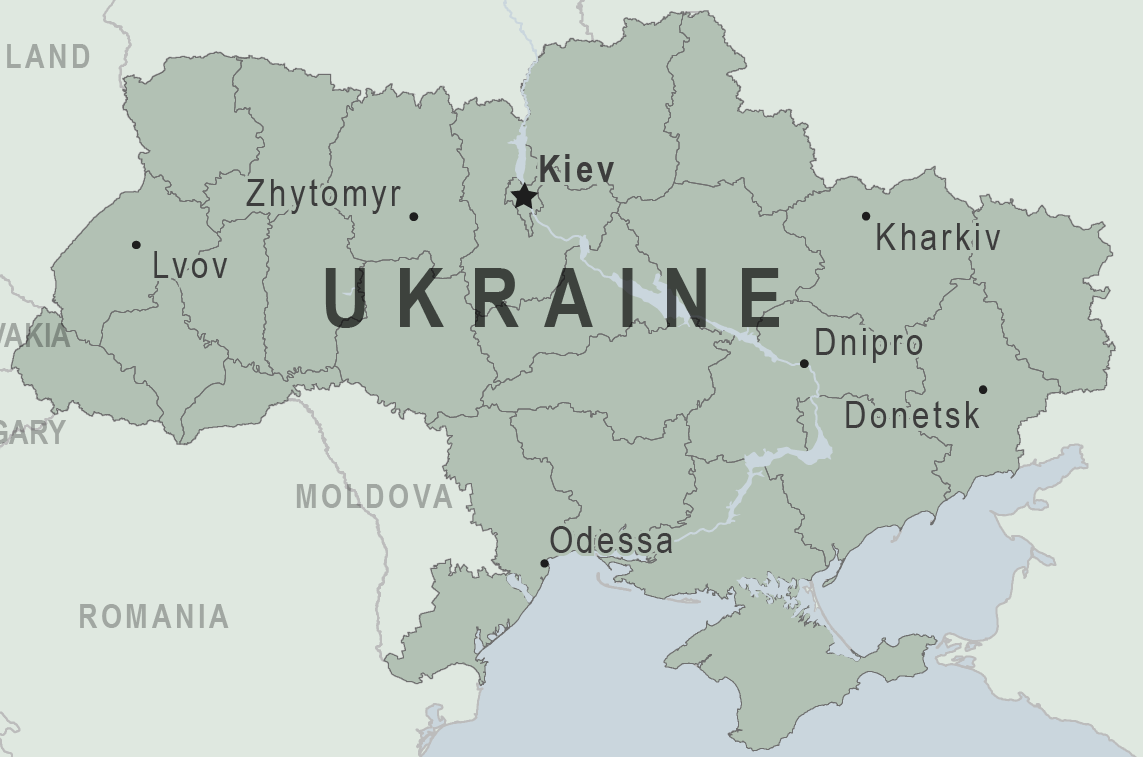
The global impact of the Russia-Ukraine war

Until recently, the war in Ukraine was set to enter its fourth year with no prospect of peace on the horizon and loss of life on both sides mounting. President Trump’s 28-point plan looks like an important step towards bringing the parties to the table. President Zelenzky has said he’s willing to work with the US on it; President Putin has said it is a basis for a final settlement. Already, separate back channel talks with Ukraine and Russia have resulted in a modified 19-point framework for negotiations.

European leaders are less happy with the framework. Their focus and that of the European media has emphasised the proposals mean Ukraine making territorial concessions, reducing the size of its military, and agreeing never to join NATO. The framework, however, also includes security guarantees for Ukraine, fast-track EU membership, and assistance with reconstruction, although the US will undoubtedly profit financially from the latter as it did in Iraq and elsewhere.

Peace negotiations are urgently needed. War weariness among the population of Ukraine is increasingly evident – as opinion polls, open criticism of the government, and the growing tide of conscription-age men leaving the country all attest. It is reasonable to assume that Putin will also be quietly satisfied to see the start of negotiations to end a war which is taking a heavy toll on Russian lives and the Russian economy.

The Ukraine war represents the most serious nuclear flashpoint in the world today. The original framework also includes points which should please all of us who want to see nuclear tensions dialled down. The 29 points include commitments that:

    • Nato will not expand further to Russia’s borders – something CND understands is a significant driver in Puttin’s invasion of Ukraine.
    • that Russia and the US will extend treaties on non-proliferation and nuclear arms control, including the START Treaty, which is due to expire in February 2026, and
    • that Ukraine will be a non-nuclear state ‘in line with’ the TPNW, Treaty on the Non-Proliferation of Nuclear Weapons.

The Russia-Ukraine war is feeding international tensions, which the negotiations will also help ease. The peace and anti-war movements will have to fight to make sure that all the implications of ending the Russia-Ukraine war are understood, as well as the interests of the US and Europe, which shape their approach to ending the war.

We reproduce below an introduction CND Vice President Kate Hudson gave at a CND conference a few days after Trump’s 28-point peace plan was made public. As she points out, if we don’t understand and fight on the politics, ‘things will keep on going wrong’ and the world could be on course for war in Europe and the possibility of a nuclear conflict.
KATE HUDSON
Global impact of the war

There is not only a European element to the war in Ukraine, it also has a global impact. I want to touch on a few of those global elements including the economy and the climate crisis.

The war is pushing the cost of living up
There is an enormous impact on the global economy. That’s what’s making our energy and food prices higher here in the UK. But of course, it’s making them higher and scarcer across the world as well, resulting in increased inflation, slower growth, disruption of supply chains, and economic uncertainty. Actually, these cone on top of the negative aspects of the COVID-19 economic experience which we saw resulted in the massive inflation at the time. The war, coming almost directly after, has doubled down on a lot of those economic problems.

The Ukraine war is making a big contribution to de-globalisation, which is something we’ve seen over the last few years, and a fragmentation of the global political economy. This kind of economic flux is affecting more than Europe; it’s having an effect worldwide. In some countries of course, which are very heavily reliant on imports, things like food and fuel are very much more expensive. In fact, we’ve seen a major increase in global food insecurity, with medium to long-term impacts on malnutrition and social unrest.

According to the UN World Food Programme figure, just in the war’s first year the number of people suffering from acute food insecurity in the 81 countries they monitor jumped by 17% –   from 276 million to 323 million. That figure has increased by another 10% every year. So it’s an escalating problem, particularly for countries in the global south.

The war has generated more greenhouse gas emissions than several EU countries combined
As well as the economic impact, there is a climate impact as well. I’m sure we’ve all got a general impression about that. There are massively increased greenhouse gas emissions, over 230 million tonnes of carbon dioxide in the first three years of the conflict. That’s equivalent to the combined emissions of Austria, Hungary, the Czech Republic and Slovakia.

The source of those is the war itself, the military activity taking place. There is also the destruction of the infrastructure and subsequent need for reconstruction. In the reconstruction process, there will be carbon emissions too. There are terrible fires both from military action and damage to facilities like oil refineries. They are really pumping out carbon emissions too. There is also direct environmental damage like pollution, oil spills, threats to biodiversity and so on. Those have long-lasting effects on Russia and Ukraine, but their impact obviously spills out beyond.

The third impact I want to talk about is the very immediate risks that result from global polarisation. We see this all the time: the US and the Europe on the one side, the ‘liberal democracies’, posed against an increasing alliance between Russia and China. That is the kind of global polarization narrative we are seeing. The world is in a state of flux over this.

Trump’s 28-point peace plan includes asset stripping and war profiteering
One of the things that really struck me about the new peace plan, is the possibility of improving US-Russian cooperation. It looks like Trump or his advisors are building in the kind of cooperation and reconstruction that is based on asset stripping and making profits from Ukraine! That is embedded within the 28 point plan. The narrative we have, which I think is correct, is that Trump wants Europe to deal with the problem of Russia, while he deals with the problem of China. That is an underlying dynamic within the peace plan.

At the same time, Trump seem to want to hedge his bets by doing deals and get better relations with Russia for himself and the US. Of course, that’s annoying Europe. It is not only a kind of flux in the global political economy, but in international relations. as well.

And finally, to touch on the wider global dynamic of the peace plan – as unfortunately, we tend always to focus on what’s happening in Europe and North America, a kind of western Eurocentric perspective. The attitudes from the global South are very interesting on this, I’m sure you’ve all have been aware of this. The approach of the global South has generally been one of active non-alignment or neutrality in the war. They have refused to sign up to the US condemn-and-attack approach to Russia or to participate in sanctions.

The global South is not buying into the US narrative
I think it’s pretty obvious to this audience why: there is a big element of distrust of western motives, double standards, based on the experience of colonialism. The global South has a preference, as does CND, for a multipolar world, so they’re not buying into the US narrative. Many see BRICS as a route to a more just order.

For CND, the issue of how to move forward as a movement is a difficult question. As you probably know, CND has opposed NATO since 1960s when the great intellectual Stuart Hall moved a motion at CND conference. That’s been our position ever since, and it’s correct one for the reasons that we all know.

In my experience in CND, the Ukraine war has been the most difficult point for us. We are anti-war and pro-peace as is the peace movement and our allies across Europe. But the US and NATO does affects what you call the peace periphery and some of our allies too. There are two obvious examples. The Green Party, whom CND has always worked well with, have changed their position on NATO, I think largely in response to the government narrative.

The second is the TUC. Three years ago, we saw pro-military spending and strong support for Ukraine coming up. This has now been somewhat reversed at the recent TUC. As you probably know that there was a for the peace and anti-war movement with a motion against military spending. Nevertheless, that win was based on a welfare not warfare argument, not on the principled issue of NATO, and not about being against the Ukraine war continuing and getting a peace settlement.

CND has to get all the political implications across
So in conclusion, although we’ve made some headway, and there is a growing desire for a settlement particularly among the people of Ukraine, we have to do a lot of work to do, to make sure the politics is understood.

So although we’ve made some headway and as people, as the speakers have said, the kind of strong desire, particularly in Ukraine for a settlement, we have to do a lot of work to fight to make sure the politics of it is understood. Because if we don’t understand and fight on the politics of it, then things will keep on going wrong.

UKRAINE: Stop the war! Build the peace!

The world is facing a period of unprecedented danger. At the end of January, the Science and Security Board of the Bulletin of the Atomic Scientists moved the hands of the Doomsday Clock forward. They are now set to 90 seconds to midnight – the closest to global catastrophe the world has ever been. The main, but not the only reason is the war in Ukraine.

Early in the course of the war Nato Secretary-General Jens Stoltenberg asserted ‘we must prepare for the fact that it could take years’. UN Secretary-General Antonio Guterres cautioned last August, the world had entered ‘a time of nuclear danger not seen since the height of the Cold War’.

Despite many warnings that the war could provoke nuclear confrontation, President Biden and Prime Minister Sunak are still calling for escalation. Encouraged by this, in December President Zelensky called on Nato allies for 500 more tanks; in January he appealed for some of the latest fighter jets.

Ukraine is a war fought on two fronts – the invasion of Russia and resistance of Ukraine; and a proxy war between the US-Nato and Russia. Sadly, Ukrainians are the all-round losers. One year on, the statistics tell the story.

According to UNHCR sources:

    • over 8,000 civilians are recorded dead and almost 13,500 more injured – the actual figures are considered to be much higher
    • approximately 8 million Ukrainians are internally displaced
    • another 8m have crossed Ukraine’s borders, including 2.8m to Russia and 1.6m to Poland, and
    • nearly 18 million Ukrainians are ‘in dire need’ of humanitarian assistance.

Continue reading “UKRAINE: Stop the war! Build the peace!”

Are US nuclear weapons coming to Britain again?

Labour CND Chair Carol Turner’s blog on the Ukraine crisis launches with the announcement that the UK is about to become the sixth European Nato member to host American nuclear weapons. Keep tuned in for updates

The world is closer to nuclear war than we’ve been for decades, closer perhaps than ever before. Strained relations between Russia and the US over Nato’s eastward expansion touched boiling point at the end of February, when Russia’s invasion of Ukraine was followed by the announcement that Russian nukes were being moved to special alert.

What’s needed is cool council, encouragement to de-escalate the war and negotiate a stable end to this dangerous conflict. Instead, the belligerent rhetoric of the US, Britain and other European Nato members adds weight to the emerging view that Nato would welcome a long and protracted war in order to exhaust Russia – and consequences for the people of Ukraine be damned.

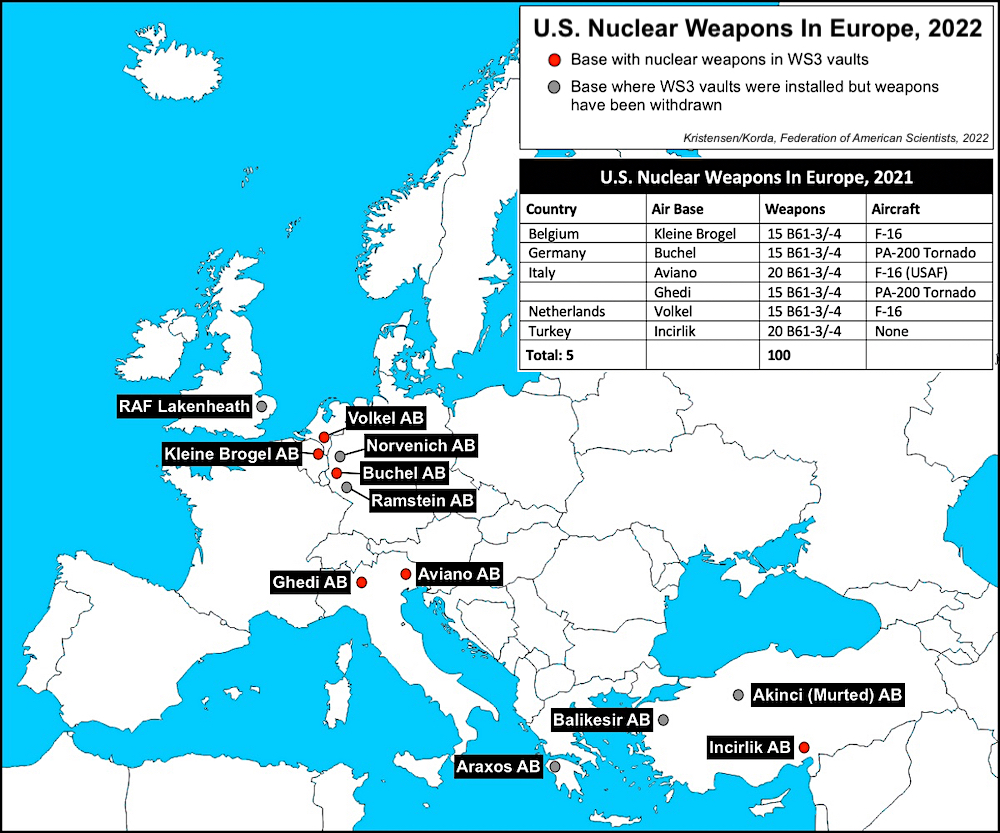
Against this looming possibility of nuclear war, a report by Hans Kristensen, Nuclear Information Project Director at the Federation of American Scientists (FAS) gives cause for us to be very afraid. The UK, he says, is set to become the sixth European Nato member to host American nuclear weapons on our territory.

Belgium, Germany, Italy, Netherlands, and Turkey already have US nuclear weapons stationed within their borders. FAS estimates around 100 US nuclear bombs are deployed in these five countries.

US Department of Defence (DoD) documents suggest the UK has been added to the list of nuclear weapons storage locations. Kristensen believes RAF Lakenheath, 80 miles northeast of London, is likely to be that facility. In the past, Lakenheath was used to store US Air Force (USAF) nuclear gravity bombs. The facilities to do so are still intact.

This analysis by FAS comes as Lakenheath is getting ready to become the first USAF base in Europe equipped with the latest generation of nuclear-capable fighter-bomber aircraft. The first of the F-35As arrived at Lakenheath in December last year; the US is due to begin training in the next 12 months.

Kristensen points out there is no public indication from Nato yet that it intends to store nuclear bombs in Lakenheath. He speculates that its upgrade ‘could potentially be intended to increase the flexibility of the existing nuclear deployment within Europe, without increasing the number of weapons’. In other words, with a war with Russia in the offing, Lakenheath could receive nuclear weapons from existing European Nato locations to ‘better realign the overall nuclear posture in Europe’.

Arms Control Association Director Daryl Kimball, however, told the Guardian he saw the upgrade of the UK storage facilities as: ‘an early sign that the US and Nato are preparing to engage in a protracted and maybe heightened standoff with Putin’s Russia.’

Meanwhile, the British government is working hand in glove with Nato and the US on Ukraine. Prime Minister Johnson’s recent announcement of increased military assistance to President Zelensky, including supplying offensive weaponry, is fanning the flames of a war that could stretch across Europe and beyond.

Keeping the people of Britain safe should be foremost amongst the UK government’s concerns. Creating the conditions for siting American nuclear weapons in Britain is tantamount to painting a target on the back of everyone in the UK.

This Tory government could and should be playing a supportive role in negotiations to end the Ukraine conflict, not helping escalate it. And Labour should be demanding it do so from across the opposition benches, not trailing in Johnson’s wake.

Read Hans Kristensen full report, Lakenheath Air Base Added To Nuclear Weapons Storage Site Upgrades, 11 April 2022 here
See Julian Borger and Sam Sabbagh, UK military vaults upgraded to store new US nuclear weapons, Guardian 12 April 2022 here

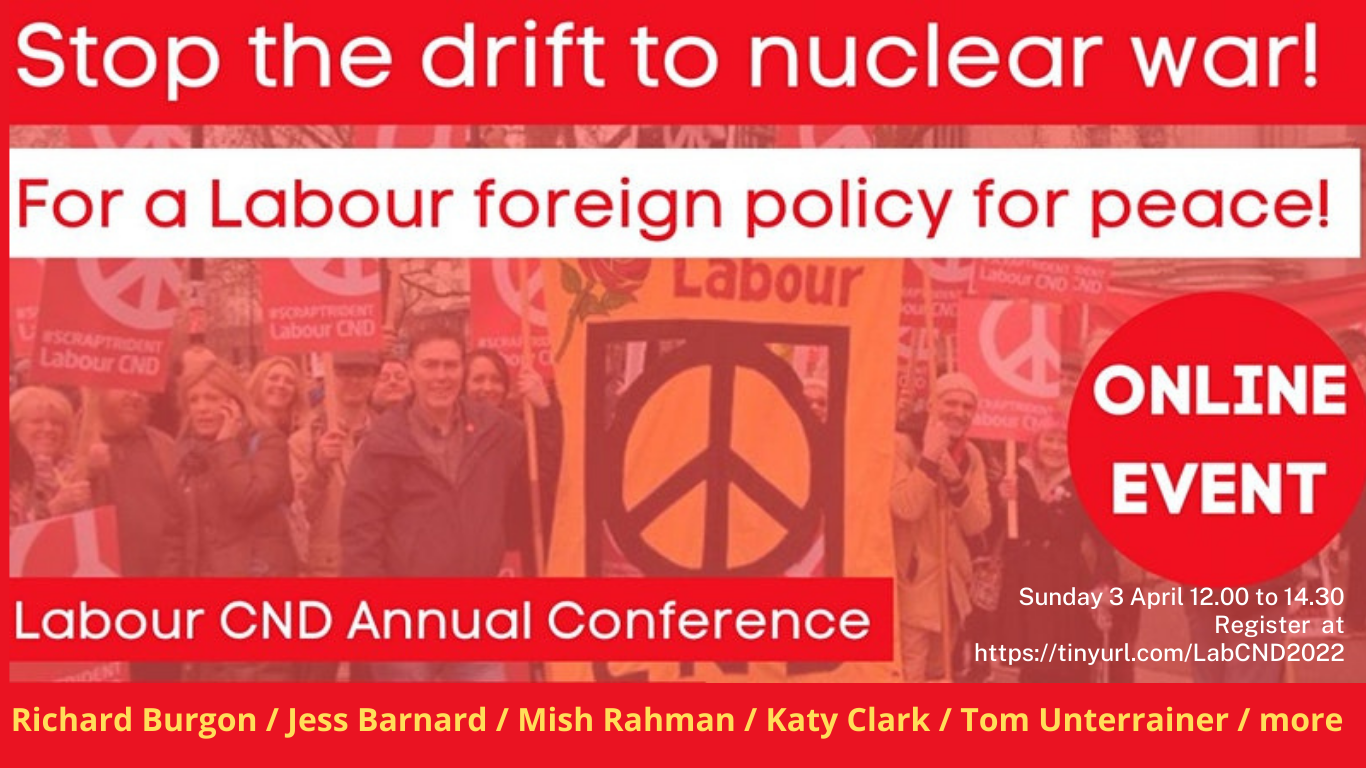
Labour CND’s 2022 conference

Register now for Labour CND’s not-to-be-missed annual conference. We’ll be debating the way forward for a Labour foreign policy based on peace, people and planet, with:

Richard Burgon MP // Tom Unterrainer CND Chair // Margaret Kimberly Black Alliance for Peace // Katy Clark MSP// Jess Barnard  Young Labour // Stuart Parkinson Scientists for Global Responsibility // Mish Rahman NEC // Sam Mason Labour CND’s climate specialist // with a musical interlude from Labour CND’s own Sam Browse.

Events in Ukraine bring the prospect of nuclear war closer. The AUKUS pact with Australia and the US intensifies a new Cold War with China. The British government is pledged to increase its nuclear weapons stockpile. Energy price hikes have renewed dthe role of nuclear power in the UK’s energy mix.

Now more than ever Labour needs a foreign policy based on peace and climate justice.

Labour Women’s Conference 2022: emergency motion on Ukraine

Annual women’s conference is coming up on 19-20 March. There’s still time to submit Labour CND’s emergency motion on Ukraine – but only just. Act now to get your CLP / women’s branch to submit it in time for the deadline of 12 noon on Tuesday 8 March, and please circulate to others to do likewise.

More deadlines and delegates info on the Labour’ Party webpage

If you’re a delegate to women’s conference, think about signing up to CLPD conference info to keep in touch with others and get info on motions, composites and more by following this link

And last but not least, please vote for Gillian Arrindell, Jean Crocker and Selina Norgrove for the 3 CLP places on the Women’s Conference Arrangements Committee.

No nuclear war. De-escalate the crisis in Ukraine

Our thoughts are with the people of Ukraine, whose country is paying a heavy economic and human price for this conflict. But this conflict also presents a much wider threat: the existential threat of a nuclear war between the United States and Russia. Join CND in calling for an end to conflict in Ukraine to avert the threat of nuclear war:

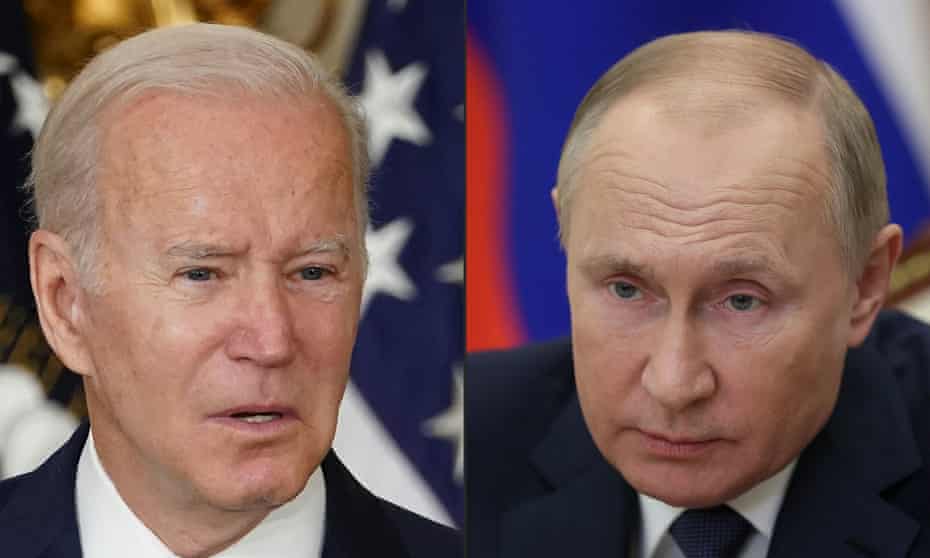
As the crisis in Ukraine escalates, the risk of nuclear war comes ever closer. President Biden pointed out last week that war between the US and Russia would be World War III, yet this possibility is closer than ever before. The entry of Russian forces into Ukraine makes diplomacy more urgent, not less.  Yet British political leaders continue to denigrate diplomatic initiatives, even as the conflict intensifies.

Rather than refusing to talk with the Russian leadership, the US administration must get to the negotiating table, to address all the fundamental issues in this conflict, including how to make the Minsk agreements work. Rather than further escalating the  conflict and militarisation of the region, the US must  recognise the risk of nuclear war and do everything possible to  achieve a peaceful solution.

Read CND’s latest statement and take a look at Kate Hudson’s blog here
Read Labour CND’s statement on Nato here

Take action

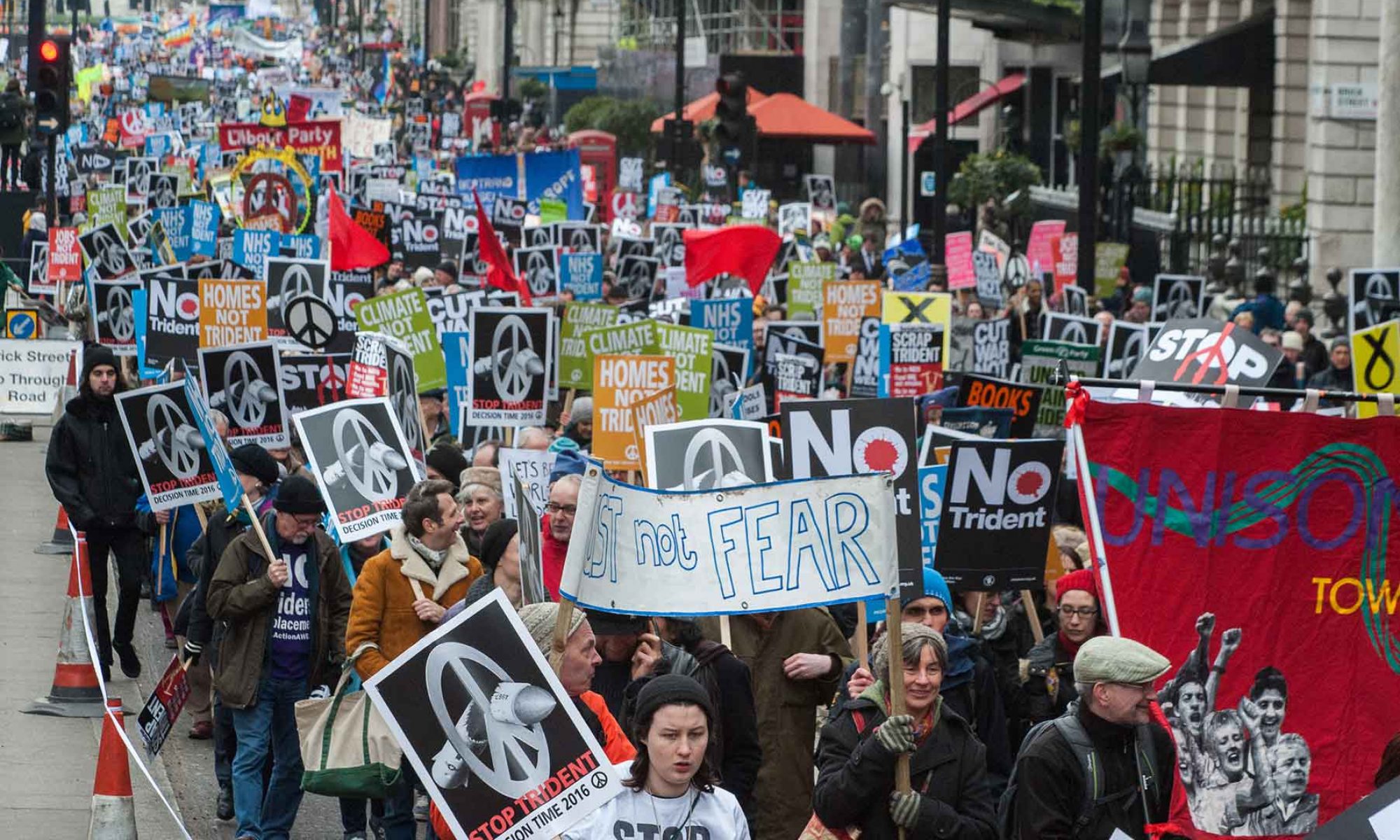
>>> Join CND’s international rally, in partnership with Code Pink and Stop the War, on Saturday 26 February, No War in Ukraine, No to Nato
>>> Get a free No Nuclear War poster here
>>> Print you own window poster here

LABOUR CND statement on Nato-Ukraine-Russia

Military posturing fans the flames of war in Europe

Keir Starmer has chosen the moment of mounting tensions over Ukraine to announce that ‘Labour’s commitment to Nato is unshakable’, attempting to justify his stance with selective and inaccurate statements about the defensive and democratic character of the North Atlantic Alliance and accusing those who disagree of showing solidarity with Putin.

Nato is not ‘a defensive alliance that has never provoked conflict’ nor does it provide a ‘guarantee of democracy and security’ as the people of Afghanistan, Iraq, Libya and elsewhere will readily testify, whose countries have been shattered and lives destroyed by two decades of war.

Neither has Nato ‘ushered in what is now approaching three-quarters of a century of peace between the nations of Europe’. Nato’s bombardment of Yugoslavia in 1999 was the first military attack on a sovereign European country since the end of World War II. It took place without UN approval and is widely regarded as illegal under international law.

Even Denis Healey, who Starmer describes as a ‘giant of the Labour movement’, argued: ‘It was a terrible mistake to attack a sovereign state without even consulting the United Nations… we should have asked Richard Holbrooke [US ambassador to the UN] to have another go at negotiation.’

In contradistinction to the benign picture Starmer seeks to paint, Nato’s evolution includes:

  • The North Atlantic Alliance is a nuclear-armed alliance committed to using nuclear weapons pre-emptively in a military conflict whether or not its adversaries possess nuclear weapons. Since the 1950s, Nato has rejected successive calls to adopt a nuclear no-first use policy.
  • Declassified US documents testify to the fact that the use of nuclear weapons was actively considered during Nato’s first military engagement, the Korean war of 1950-53.
  • The Warsaw Pact dissolved in July 1991 after the collapse of the Soviet Union. By contrast Nato extended its area of operations. In the ensuing three decades, it has expanded its mission statement and enlarged its membership.
  • There are currently 30 Nato member states. Additionally, Nato works with 40 non-member partner states across the globe on a wide range of political and security-related issues. Full Nato members in East Europe include Poland, Hungary, Czech Republic, Bulgaria, Rumania, and Albania, and the Baltic states of Estonia, Latvia, and Lithuania which border Russia. Nato partners with borders on Russia include Finland, Belarus, Ukraine, and Kazakhstan. Russia’s near abroad – Armenia, Azerbaijan, Georgia, Kyrgyz Republic, Tajikistan, Turkmenistan, and Uzbekistan – are also Nato partners.
  • Three Nato members are nuclear weapons states – Britain, France and the US. Five European members – Belgium, Germany, Italy, Netherlands, and Turkey – host US nuclear weapons on their territories and are pledged to deploy them if Nato so commands.

Tensions between Nato and Russia have been building for three decades. Ukraine must not become the pretext for a military clash between two nuclear armed adversaries.

Labour CND calls for de-escalation and dialogue, not a build-up of armaments and troops leading to the brink of a war in which the people of Ukraine will be the losers. This is a strategy of sanity, in contrast to the military posturings of Britain and the US which fan the flames of war in Europe.

Download a copy for circulation here